



























Your channel viewers will see links here, including "subscribe" and "add as friend".
Profile
Name
Precious Union
Description
Awaken your spirit with the most powerful collection of sacred texts and timeless wisdom ever assembled. Explore deeper layers of faith, personal growth, and divine truth through these extraordinary works:
📘 KJV Study Bible (Thomas Nelson, 2nd Ed.) – Deepen your study with historical insights.
👑 Myles Munroe’s Kingdom Series – Life-changing lessons on purpose and leadership.
Jung’s most famous televised quote came after he was asked if he believed in God. He replied, “I don’t need to believe, I know.
“Until you make the unconscious conscious, it will direct your life, and you will call it fate.”
― C.G. Jung
Subscribers
28
Subscriptions
Recent Activity
 |
Precious Union
Some Christians treat the Old Covenant (the Mosaic Law given at Sinai) as their binding agreement with God because they read the Bible as a single continuous moral code, emphasize continuity of Scripture, or belong to traditions that stress ongoing obedience to Torah commands. According to the New Testament itself, however, the Old Covenant was a temporary arrangement made specifically with national Israel and has been fulfilled and superseded by the New Covenant in Christ.
Why some or many Christians view the Mosaic Law as their covenant
The Old Testament presents the Law as God’s direct revelation to His people. The Ten Commandments and surrounding statutes are given with solemn covenantal language (“I am the LORD your God… you shall have no other gods before me”). Readers who approach the whole Bible as equally and directly applicable often conclude that these commands remain the standing terms of relationship with God.
Continuity language in the New Testament can be misread. Jesus says He did not come to abolish the Law but to fulfill it (Matthew 5:17). Paul calls the Law “holy, righteous and good” (Romans 7:12). Passages that affirm the ongoing value of Scripture (2 Timothy 3:16) or call believers to holiness are sometimes taken to mean the Mosaic code itself is still the covenant framework.
Certain movements heighten this view. Hebrew-Roots groups, some Messianic congregations, Seventh-day Adventist emphasis on the Sabbath and dietary laws, and various legalistic or reconstructionist strands treat large portions of Torah as still binding on Christians. Others simply inherit a cultural habit of treating the Ten Commandments as the universal Christian rule of life without distinguishing covenant administrations.
Practical and pastoral factors play a role. The Law provides clear external standards. In seasons of moral uncertainty or when people feel the need for measurable obedience, the detailed Mosaic regulations can feel more concrete than the New Testament’s emphasis on the Spirit and the law of love.
Why the Old Covenant is not the Christian’s agreement with God
The New Testament consistently presents the Mosaic Covenant as temporary, particular, and fulfilled in Christ rather than as the standing covenant for the church.
It was made with the nation of Israel, not with the multi-ethnic church. Exodus 19–24 and Deuteronomy address the descendants of Abraham, Isaac, and Jacob after the Exodus. Gentiles were never parties to that covenant in the same way (Ephesians 2:11–12).
Scripture itself declares the Old Covenant obsolete. Jeremiah 31:31–34 promises a “new covenant” not like the one made with the fathers when God led them out of Egypt. The letter to the Hebrews quotes this passage at length and concludes: “In speaking of a new covenant, he makes the first one obsolete. And what is becoming obsolete and growing old is ready to vanish away” (Hebrews 8:13; see also 7:18–19, 10:1–18).
Christ fulfills and ends the Law’s covenantal role. Galatians 3:24–25 describes the Law as a guardian or tutor until Christ came; now that faith has come, “we are no longer under a guardian.” Romans 6:14 states that believers “are not under law but under grace.” Romans 7 and 8 and 2 Corinthians 3 contrast the ministry of the letter (which kills) with the ministry of the Spirit (which gives life).
The ceremonial and civil aspects of the Mosaic code pointed forward to Christ and are no longer obligatory. Animal sacrifices, the priesthood, the temple system, and the purity laws find their fulfillment in Jesus’ once-for-all sacrifice and the indwelling Spirit (Hebrews 9–10). The civil code was for the theocratic nation of Israel.
Moral norms continue, but under a different administration. The ethical demands that reflect God’s character (love of God and neighbor, prohibitions of murder, adultery, theft, etc.) are reaffirmed in the New Testament, yet they are not mediated through the Sinai covenant. Believers are under the “law of Christ” (Galatians 6:2; 1 Corinthians 9:21) and are empowered by the Spirit rather than driven by the external code as a covenant of works.
In short, many Christians feel the weight and continuity of the Mosaic material and therefore treat it as their covenant. The New Testament, however, teaches that the Old Covenant served a temporary pedagogical and preparatory purpose for Israel and has been fulfilled and replaced by the New Covenant ratified in Christ’s blood. Christians relate to God through that New Covenant of grace, not through the Mosaic agreement.
|
|
|
Precious Union
I am far more alarmed by Europe’s entrenched deep-state governing infrastructures than by social media or AI. The real threat lies in unaccountable bureaucratic and security apparatuses that shield systemic abuse behind layers of classification, “national interest,” and institutional solidarity.
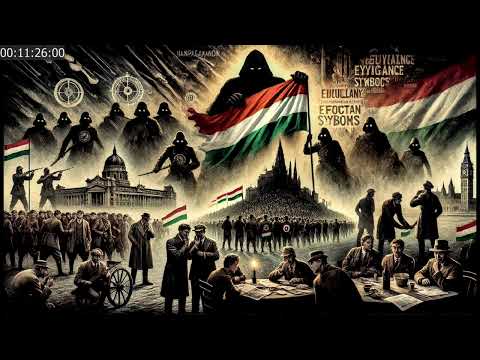
In Hungary, this problem runs deep through consecutive regimes. It began with Béla Kun’s 1919 Soviet Republic and its Red Terror, continued under Horthy’s authoritarian rule, intensified through Rákosi’s Stalinist purges and show trials, and persisted in Kádár’s post-1956 “silent terror” of informants, conformity pressure, and quiet repression. After 1989, incomplete lustration allowed many of these networks and personnel to recycle into the new democratic structures—especially in the public sector, judiciary, security services, and administration.
These regimes repeatedly used the same method: classify government systems and networks in the name of the state, making genuine investigation or accountability nearly impossible. Public authority and state institutions were weaponized for fraud, expropriation, purges, and organized repression. Free thinkers, successful individuals operating outside gatekeepers, and dissidents were labeled enemies of the collective and destroyed through orchestrated campaigns. This was state-controlled terrorism—multi-layered, protected by classification, and known only to trusted insiders. It bypassed individual conscience, manufactured collective narratives, and imposed a perverse shared identity.
You cannot build a stable future by papering over these crimes. Ignoring foundational abuses is like constructing a house on quicksand. Victims were offset against “state interests,” good inverted with evil, and perpetrators shielded while the public bore the consequences. This mechanism echoes occult practices of moral inversion far more than any genuine national or Christian tradition.
Orbán’s 2011 Fundamental Law, which replaced the old constitution and explicitly referenced the Hungarian Conquest of 896 and Christian heritage, was presented as a restoration. Yet the deeper continuities of unaccountable power persisted. While Orbán clashed with the EU and positioned himself as a defender of sovereignty, the systemic habits of institutional retaliation, clientelism, and narrative control did not vanish.
Challenging this apparatus today still carries severe costs. Dissenters risk psychiatric institutionalization, bureaucratic harassment, fabricated cases, and coordinated retaliation. Public servants close ranks: question one, and the system mobilizes against you. This is not isolated incompetence—it is systematic. NGOs and oversight bodies often declare it “out of scope” or too entrenched to confront. I know this from direct experience: involuntary placement in care, rights violations, and secret custodial proceedings conducted without my knowledge.
Hungary’s low ranking on corruption perception indices—repeatedly the worst or near-worst in the EU—reflects real problems of state capture and impunity that fuel public cynicism.
The majority adapts—some blank it out, others benefit—while those outside the collective narrative suffer daily humiliation, extortion, economic failure, or illness. National identity has not fundamentally healed; too many have simply accommodated the mechanism.
For Christians, there is only one true Shepherd. Any enforced “collective identity” born of state terror, inverted morality, or occult-like power structures is a perversion, not a foundation. True renewal demands confronting these layered crimes with transparency and accountability, not new unifying myths or external protectors. Without addressing the foundation, no lasting house can stand.
|
|
|
Precious Union
Lately, I have been reflecting on the foreign policies of the EU and the United States, particularly their unconditional support for Israel. The modern State of Israel was established in 1948 as a Jewish homeland after the Holocaust and centuries of persecution, yet its creation and expansion came at a heavy cost to the Palestinian population, involving displacement, loss of land, and ongoing conflict.
What troubles me deeply is the human toll. Since October 7, 2023, when Hamas launched a brutal attack killing around 1,200 Israelis and taking hostages, Israel's military response in Gaza has resulted in tens of thousands of Palestinian deaths—many of them women and children—according to health authorities there and independent analyses. High civilian casualty figures, destruction of infrastructure, and humanitarian crisis raise serious questions about proportionality, international law, and the ethics of warfare. Over decades, settlement expansion in the West Bank, periodic operations, and asymmetric power have led to Palestinian suffering, family destructions, and community erosion. These realities cannot be ignored or dismissed.
At the same time, Israel faces existential threats from groups like Hamas and Hezbollah, whose charters call for its destruction and who deliberately embed among civilians. The conflict is not one-sided. Yet the scale of devastation in Gaza, combined with statements from some Israeli officials, fuels accusations of collective punishment and even genocide—claims now before the International Court of Justice.
Why do the EU and US back Israel so strongly, often appearing to do so in our names? Strategic interests play a major role: Israel serves as a reliable ally in a volatile region, sharing intelligence, technology, and military cooperation against common threats like Iran. Decades of lobbying, evangelical Christian support in the US, and historical guilt over Jewish persecution also shape policy. But this alignment increasingly looks like complicity in actions that many citizens reject—actions that prioritize one side while our own governments seem indifferent to the human suffering and long-term consequences.
The “chosen people” concept in Judaism refers to a covenant of responsibility—to uphold moral law and be a light to the nations—not a divine license for conquest, killing innocents, or supremacy over others. No just God, certainly not the one I believe in, would command the slaughter of children, the robbing of lands, or the corruption of politicians to advance any earthly agenda. Faith that justifies endless violence in the name of ancient promises contradicts universal ethics and basic humanity.
Equally disturbing is how legitimate criticism of Israeli government policies—settlements, disproportionate force, or influence on Western politics—is too often branded as antisemitism or racism. This tactic stifles debate and restricts our right to speak truth. Holding any government accountable is not hatred of a people. Jews, like any group, are not monolithic; many Israelis and diaspora Jews criticize their own government. Conflating policy critique with bigotry protects the powerful and erodes free speech. We must be able to say: no nation or lobby should run our foreign policy or place another country's interests ahead of our children's future and universal human rights.
Blind support for any side in this tragedy serves neither peace nor justice. True morality demands consistent standards—condemning terrorism against Israelis while refusing to excuse excessive force or collective suffering inflicted on Palestinians. Our governments should not write blank checks in our names. We deserve better: policies rooted in truth, accountability, and the equal worth of all human lives.
|
|
|
Precious Union
My new Bible for this year ;)
 |
|
Friends
Channel Comments
There are no comments for this user.
Add comment